


Stainless Steel Fasteners vs Carbon Steel Fasteners: Which Is Better?

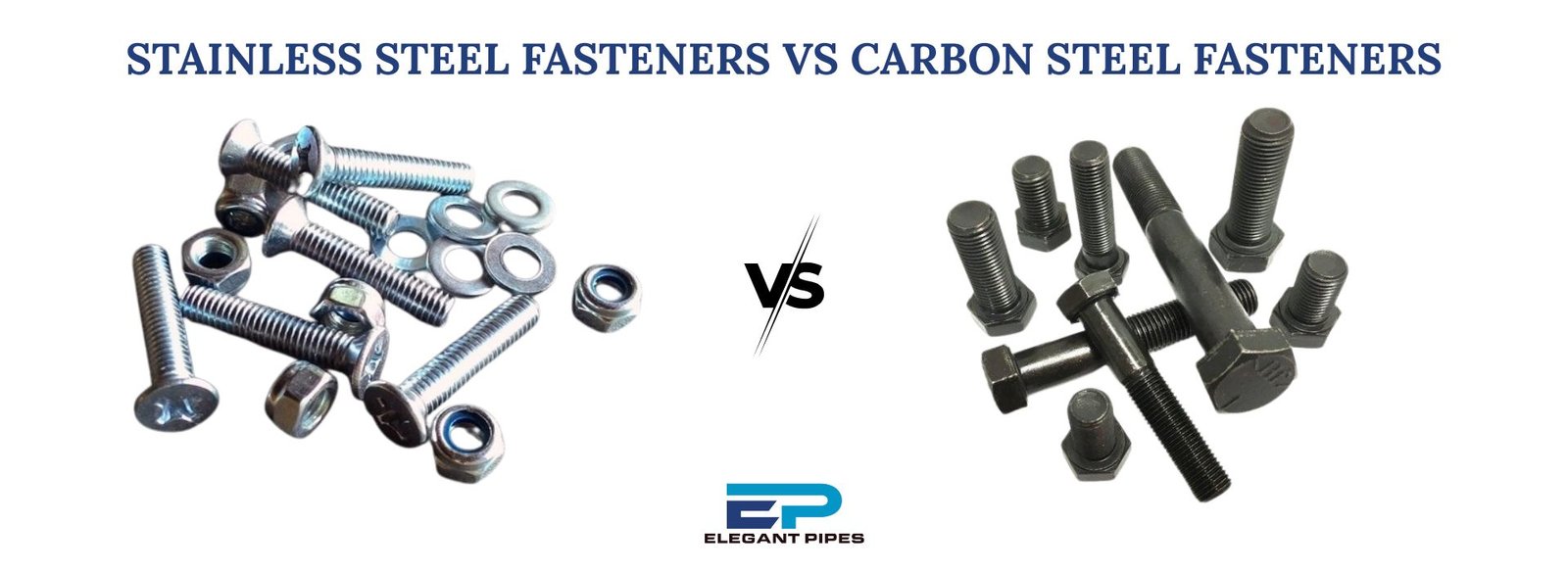
In industrial projects, choosing between Stainless Steel Fasteners vs Carbon Steel Fasteners is an important decision because fasteners directly impact the strength, safety, and long-term performance of structures and equipment. Procurement managers, EPC contractors, and engineers must consider factors such as operating environment, mechanical load, corrosion exposure, and applicable standards to make the right choice. In simple terms, the better option depends on how and where the fasteners will be used. As a leading supplier and exporter of industrial pipes, tubes, and allied products, Elegant Pipes works with global buyers across India, the Middle East, Europe, and the USA, where selecting the correct fasteners is critical for reliable and efficient project execution.
Understanding Industrial Fasteners
Fasteners are mechanical devices used to join, secure, or anchor components in industrial systems. In sectors such as oil & gas, power plants, construction, and chemicals, fasteners must withstand:
- Mechanical loads
- Pressure and vibration
- Temperature variations
- Corrosive environments
The two most commonly used materials are Stainless Steel Fasteners and Carbon Steel Fasteners, each with distinct properties.
What Are Stainless Steel Fasteners?
Stainless Steel Fasteners are manufactured using alloyed steel containing chromium (minimum ~10.5%), which forms a passive oxide layer that provides excellent corrosion resistance.
Common Types of Stainless Steel Fasteners
- Stainless Steel Bolts
- Stainless Steel Studs
- Stainless Steel Washers
- SS Screws
- SS Anchor Bolts
Common Stainless Steel Grades
- SS 304 / 304L – General industrial use
- SS 316 / 316L – Marine & chemical environments
- SS 410 / 420 – Higher strength, moderate corrosion resistance
These grades are widely used in SS Industrial Fasteners supplied for export markets.
What Are Carbon Steel Fasteners?
Carbon Steel Fasteners are produced from steel with varying carbon content and do not inherently resist corrosion unless coated or plated.
Typical Carbon Steel Grades
- Low Carbon Steel (ASTM A307)
- Medium Carbon Steel (ASTM A193 B7)
- High Carbon / Alloy Steel (ASTM A194 2H)
Carbon steel fasteners are commonly used in structural and high-load applications where corrosion exposure is controlled.
Stainless Steel Fasteners vs Carbon Steel Fasteners: Key Differences
1. Material Composition
| Property | Stainless Steel Fasteners | Carbon Steel Fasteners |
|---|---|---|
| Alloy Content | Chromium, Nickel, Molybdenum | Primarily Iron & Carbon |
| Corrosion Resistance | Excellent | Poor (unless coated) |
| Magnetic Properties | Mostly non-magnetic | Magnetic |
2. Shape, Dimensions & Customization Availability
Both SS and Carbon Steel Fasteners are available in standard and custom forms.
Common Shapes
- Hex bolts
- Stud bolts
- Anchor bolts
- Socket head cap screws
- Washers & nuts
Customization Options
- Thread length & pitch
- Head type
- Surface finish
- Special tolerances
Stainless Steel Fasteners are often preferred for custom fabrication due to better machinability for precision applications.
3. Measurements & Dimensional Standards
Fasteners are manufactured based on strict dimensional controls.
Common Measurement Parameters
- Nominal Bore (NB)
- Outer Diameter (OD)
- Inner Diameter (ID) (for washers)
Both materials comply with international dimensional standards, but SS fasteners maintain tighter tolerances in corrosive environments over time.
4. Tolerances & Dimensional Stability
- Stainless Steel Fasteners
- Better dimensional stability under temperature variation
- Lower risk of corrosion-induced thread damage
- Carbon Steel Fasteners
- High initial strength
- Tolerances can degrade due to rust or oxidation
For export projects requiring long service life, SS Industrial Fasteners offer superior performance.
5. Wall Thickness & Schedules (Anchor & Structural Fasteners)
For heavy-duty applications such as SS Anchor Bolts, wall thickness and cross-sectional strength are critical.
- Carbon steel fasteners often follow higher strength schedules
- Stainless steel fasteners balance strength + corrosion resistance
Selection depends on load calculations and environmental exposure.
6. Strength & Pressure Rating
| Factor | Stainless Steel Fasteners | Carbon Steel Fasteners |
|---|---|---|
| Tensile Strength | Moderate to High | Very High |
| Yield Strength | Moderate | High |
| Pressure Handling | Excellent for corrosive systems | Excellent for dry systems |
Carbon steel fasteners are often selected for high-pressure mechanical loads, while stainless steel fasteners are ideal where corrosion and hygiene matter.
7. Manufacturing Process Differences
Stainless Steel Fasteners
- Hot forging or cold heading
- Solution annealing (for austenitic grades)
- Precision machining
- Passivation
Carbon Steel Fasteners
- Hot forging
- Heat treatment (quenching & tempering)
- Surface coatings (zinc, black oxide, PTFE)
Manufacturing complexity is higher for Stainless Steel Bolts and Studs, contributing to better surface integrity.
Industry Applications Comparison
Oil & Gas Industry
- Preferred: Stainless Steel Fasteners (SS 316, Duplex)
- Reason: Resistance to chlorides, moisture, and chemicals
Construction & Infrastructure
- Preferred: Carbon Steel Fasteners
- Reason: High structural load capacity
Power Plants
- Used: Both
- Carbon steel for dry zones
- Stainless steel for cooling & wet systems
Chemical & Process Industries
- Preferred: SS Industrial Fasteners
- Reason: Chemical resistance & safety
Marine & Offshore
- Preferred: Stainless Steel Fasteners
- Reason: Saltwater corrosion resistance
Common International Standards & Specifications
Stainless Steel Fasteners Standards
- ASTM A193 / A194
- ASTM F593 / F594
- EN ISO 3506
- ASME B18 Series
Carbon Steel Fasteners Standards
- ASTM A307
- ASTM A325 / A490
- ASTM A193 B7
- API 20E / 20F
Compliance with these standards is critical for global export projects.
Stainless Steel Fasteners vs Carbon Steel Fasteners: Summary Table
| Criteria | Stainless Steel Fasteners | Carbon Steel Fasteners |
|---|---|---|
| Corrosion Resistance | Excellent | Low |
| Strength | Moderate | High |
| Maintenance | Low | High |
| Customization | High | Moderate |
| Global Export Use | Very High | High |
Conclusion: Which Is Better?
There is no universal answer.
- Choose Stainless Steel Fasteners for corrosion resistance, durability, and long-term reliability.
- Choose Carbon Steel Fasteners for high-strength, dry, and controlled environments.
For global EPC projects, export compliance, and long service life, Stainless Steel Fasteners are often the safer and more reliable choice.
FAQs
1. Which fastener is better for outdoor applications?
Stainless Steel Fasteners are better due to superior corrosion resistance.
2. Are Stainless Steel Fasteners strong enough for industrial use?
Yes. Grades like SS 316 and SS 410 are widely used in heavy industries.
3. Can Carbon Steel Fasteners be used in corrosive environments?
Only with coatings, but performance is still limited compared to stainless steel.
4. Do Stainless Steel Fasteners meet international standards?
Yes. They comply with ASTM, ASME, EN, and ISO standards.
5. Which fasteners are preferred for chemical plants?
SS Industrial Fasteners due to chemical resistance and hygiene.