Stainless Steel Ball Valves vs Gate Valves: Differences, Applications and Selection Guide

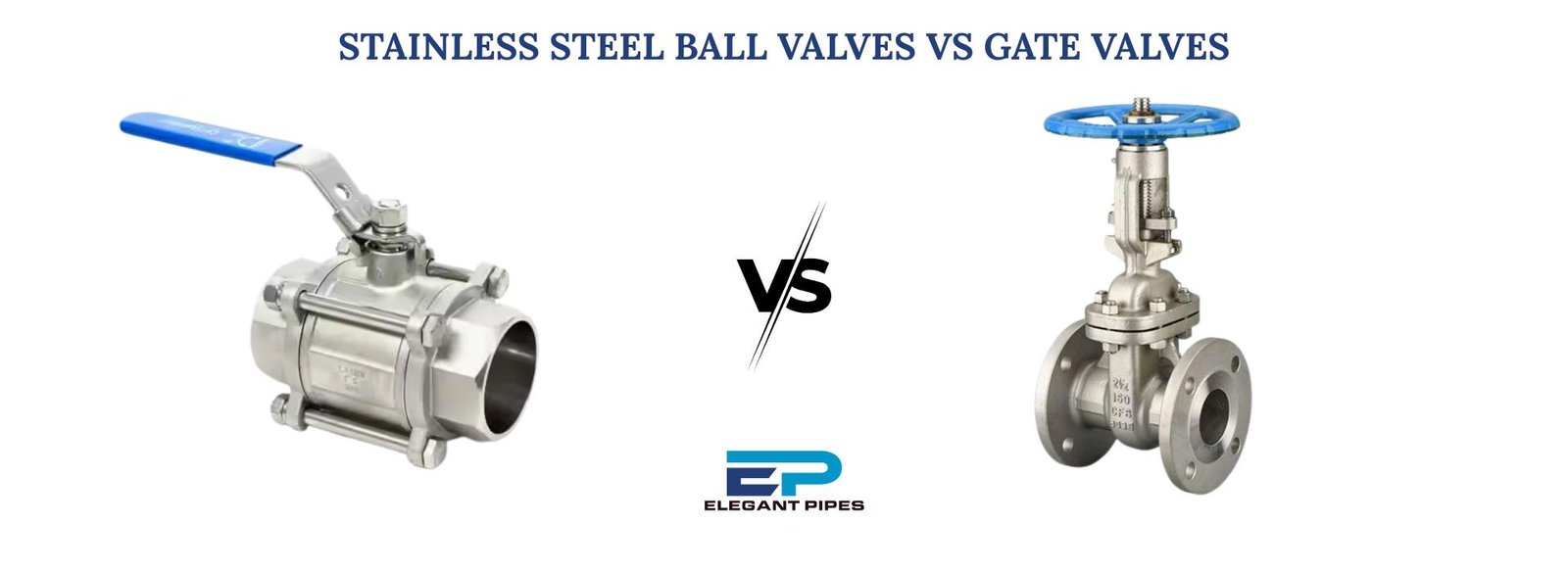
Choosing between a ball valve and a gate valve is not simply a product decision; it affects system reliability, maintenance costs and process safety. For engineers, plant managers and industrial buyers, understanding the practical differences between these two valve types is essential before specifying components for critical service.
When comparing Stainless Steel Ball Valves vs Gate Valves, the simplest distinction is this: ball valves excel in shut-off and flow control, while gate valves are primarily designed for isolation. Both serve vital roles in industrial piping systems, but each performs differently under varying pressure, temperature and operating conditions.
At Elegant Pipes, this question often arises during project discussions because valve selection has a direct impact on long-term performance. Whether the application involves chemical processing, water treatment or oil and gas systems, selecting the correct stainless steel industrial valve can improve efficiency while reducing operational risk.
What Are Stainless Steel Ball Valves?
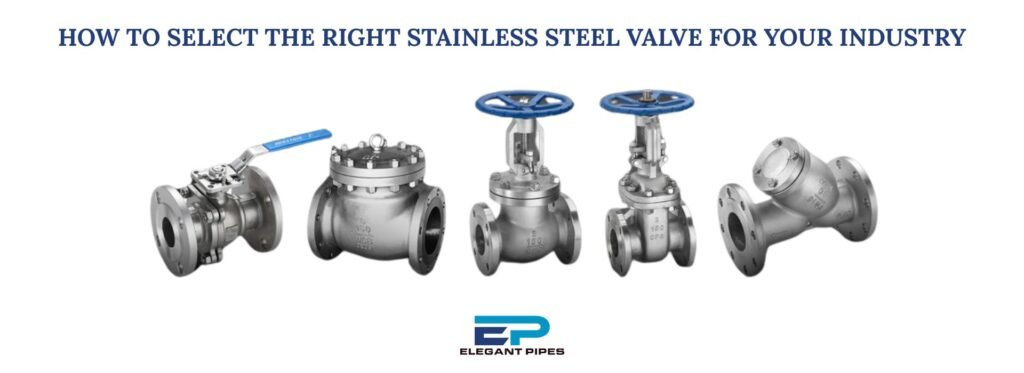
A stainless steel ball valve is a quarter-turn shut-off valve that uses a bored spherical ball to permit or block flow. When the port aligns with the pipeline, media passes through. A 90-degree turn closes the valve and stops flow almost instantly.
This straightforward mechanism explains why ball valves for flow control remain common across process industries. They provide rapid operation, reliable sealing and minimal pressure drop, particularly in full port valve configurations.
In short, ball valves suit applications where quick shut-off, frequent cycling and automation matter.
Because stainless steel offers corrosion resistance and strength, these valves perform exceptionally well in demanding services involving chemicals, solvents, steam and aggressive fluids. This is why stainless steel ball valve applications are widespread in modern industrial plants.
Their major advantages include:
- Tight shut-off with low leakage risk
- Fast quarter-turn operation
- Strong automation compatibility with pneumatic or electric actuators
At Elegant Pipes, stainless steel ball valves are often selected where buyers need durable shut-off valves with dependable long-term service.
What Are Stainless Steel Gate Valves?
A gate valve controls flow using a gate or wedge that rises to open the passage and lowers to stop flow. Unlike ball valves, gate valves use linear motion and multi-turn operation.
Their primary role is isolation.
Gate valves for isolation perform best when fully open or fully closed. Once fully open, the valve allows near-unrestricted straight-through flow, which helps reduce turbulence and pressure loss.
The main advantage is simple: gate valves suit large pipelines and systems where flow should move with minimal restriction.
They are commonly specified in water distribution, steam lines and process transfer services. Stainless steel construction adds corrosion resistance and durability, particularly in harsh industrial environments.
At Elegant Pipes, gate valves are frequently chosen for projects where full-bore flow and dependable shut-off in larger diameter systems take priority.
Key Differences Between Ball Valves and Gate Valves
The main difference is that ball valves focus on control and sealing, while gate valves focus on isolation and unrestricted flow.
| Feature | Stainless Steel Ball Valve | Stainless Steel Gate Valve |
| Operation | Quarter-turn | Multi-turn |
| Primary Use | Shut-off and control | Isolation |
| Flow Regulation | Suitable for limited control | Not ideal |
| Shut-off Speed | Fast | Slower |
| Pressure Drop | Very low | Minimal when open |
| Maintenance | Lower | Higher |
| Automation | Excellent | Limited |
| Typical Duty | Frequent operation | Static isolation |
Design and Operation
The valve mechanism alone changes performance significantly. Ball valves use a rotating sphere, whereas gate valves rely on a rising or non-rising wedge.
For repeated cycling, ball valves generally perform better.
Flow Control
This is a major point in gate valve vs ball valve differences.
Ball valves can support shut-off and moderate regulation duties. Gate valves should not throttle flow, as partial opening can cause erosion, vibration and seat damage.
Pressure Handling
Both valve types can manage demanding pressure classes when properly designed.
Gate valves often serve high-pressure mainline isolation, while ball valves excel in pressure control applications within process industries.
Shut-Off Performance
For zero-leak shut-off, ball valves generally offer stronger sealing performance.
This matters in hazardous fluid handling, compressed air and chemical dosing systems where leakage tolerance is extremely low.
Maintenance and Durability
Ball valves usually require less maintenance because they have simpler operating mechanics.
Gate valves can require more servicing, especially in systems prone to sediment, sticking or infrequent operation.
Cost Considerations
Initial cost should never be the sole selection factor.
Although some gate valves may appear more economical upfront, lifecycle costs often favour ball valves where maintenance reduction and automation provide long-term value.
Applications of Stainless Steel Ball Valves
Ball valves are widely used wherever rapid shut-off and process reliability matter.
Chemical plants rely on them for corrosive media handling. Food processing facilities use them in hygienic lines. Pharmaceutical systems value their cleanability and sealing performance.
In oil and gas operations, they are often installed in instrumentation lines, fuel transfer systems and emergency shut-off service.
Common stainless steel ball valve applications include:
- Chemical and petrochemical processing
- Water treatment dosing systems
- Steam and condensate lines
- Automated process skids and instrumentation
At Elegant Pipes, many industrial buyers favour full port stainless steel ball valves for demanding applications where flow efficiency and corrosion resistance are equally important.
Applications of Stainless Steel Gate Valves
Gate valves continue to play an important role in heavy-duty isolation service.
They are common in municipal water infrastructure, refinery systems, marine piping and power generation.
Their straight-through flow path makes them suitable where large fluid volumes move continuously and pressure loss must remain low.
Steam systems also frequently use gate valves due to their ability to handle elevated temperatures when specified correctly.
Where valves remain mostly open or closed for long periods, gate valves often prove highly effective.
How to Choose Between Ball Valves and Gate Valves
A reliable valve selection guide starts with operating conditions.
1. Evaluate Media Type
For corrosive liquids, gases or clean process fluids, ball valves often perform well.
For large-volume water or steam isolation, gate valves may be more suitable.
2. Review Pressure and Temperature
Always match pressure class, seat material and valve materials to service conditions.
High-temperature duties may favour specialised gate valve designs, while aggressive chemicals often favour stainless ball valves.
3. Consider Frequency of Operation
This often decides the valve type.
If the valve cycles frequently, choose a ball valve.
If it remains mostly static, a gate valve may be more appropriate.
4. Assess Maintenance Needs
Remote installations often benefit from lower-maintenance ball valves.
Where servicing access is limited, this factor becomes critical.
5. Match the Industry Application
When deciding how to choose industrial valves, process duty should lead specification.
Control applications usually favour ball valves.
Mainline isolation often favours gate valves.
Critical shut-off systems frequently favour stainless steel ball valves.
Ball Valve vs Gate Valve: Which One Is Better?
There is no universal answer.
Ball valves are generally better for fast shut-off, automation and frequent operation. Gate valves are generally better for full isolation in larger pipelines.
If the process demands responsiveness, sealing reliability and lower maintenance, ball valves usually offer the stronger solution.
If the priority is uninterrupted flow with dependable isolation, gate valves often make more sense.
At Elegant Pipes, valve selection typically comes down to application duty rather than one valve being inherently superior.
Making the Right Valve Choice for Long-Term Performance
When evaluating Stainless Steel Ball Valves vs Gate Valves, the better choice always depends on process requirements.
Ball valves deliver rapid shut-off, strong sealing and excellent compatibility with automated systems. Gate valves remain valuable where full-bore flow and reliable isolation matter most.
For engineers and buyers, the best approach is to assess media, pressure, operating frequency and maintenance demands before selecting a valve.
A well-specified valve does more than control flow; it protects uptime, efficiency and asset life.
At Elegant Pipes, the focus remains on supplying stainless steel industrial valves suited to demanding process applications, with practical guidance that helps customers select the right solution for long-term performance.
Frequently Asked Questions
Are ball valves better than gate valves?
For frequent operation and tight shut-off, yes. For certain isolation duties, gate valves may be more suitable.
Can gate valves regulate flow?
No. Gate valves should not be used for throttling because this can damage internal components.
Why are stainless steel ball valves common in process industries?
They offer corrosion resistance, reliable shut-off and strong automation compatibility.
Which valve lasts longer?
Service life depends on conditions, but ball valves often perform longer in cycling applications due to reduced wear.
When should I choose a gate valve?
Choose a gate valve for large pipelines, long-term isolation duties and applications requiring minimal flow restriction.