MS Rectangular Pipe vs Square Pipe

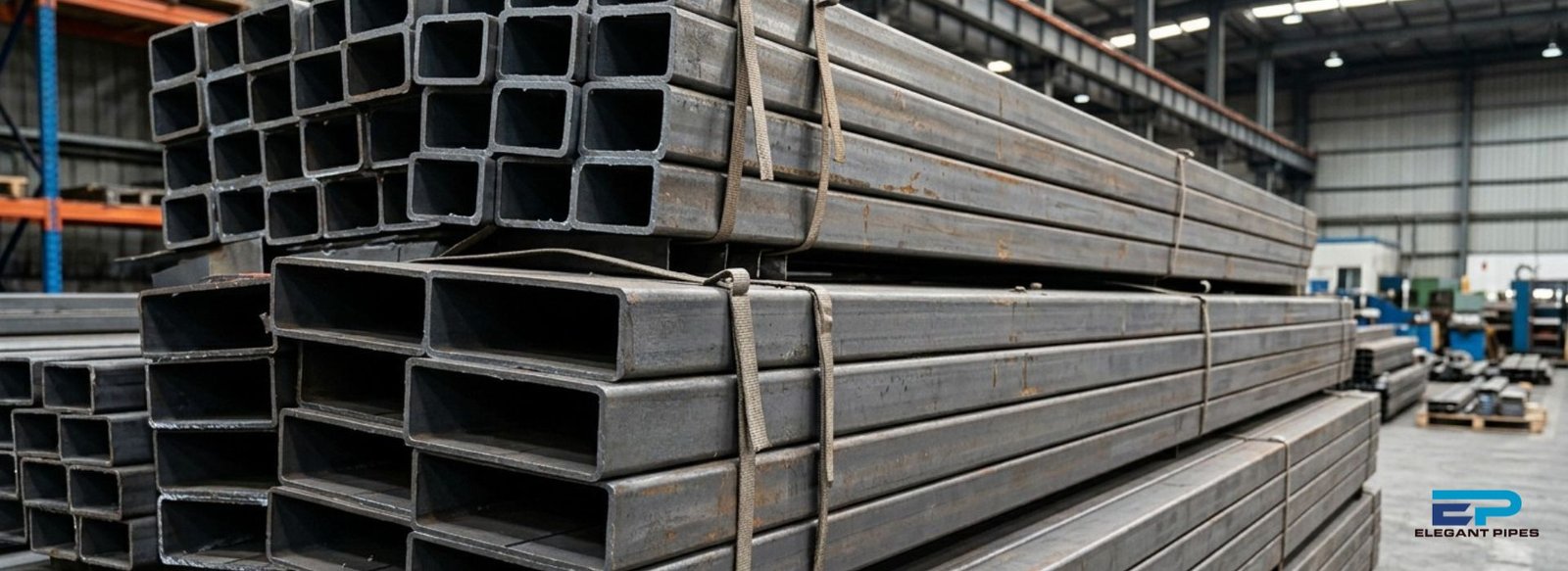
When someone searches for MS Rectangular Pipe vs Square Pipe, the goal is simple. They want a clear answer that helps them choose the right pipe for their work.
Both mild steel rectangular pipe and mild steel square pipe are used across construction, fabrication, and industrial projects. They may look similar, but their performance depends on shape, load direction, and application.
If you understand how each behaves in real conditions, the selection becomes much easier and more accurate.
Understanding MS Rectangular Pipe in Practical Use
Structure and Load Orientation
To understand what is MS rectangular pipe, think in terms of how the shape reacts when force is applied. A rectangular hollow section has two unequal sides, which means it does not behave the same in every direction.
When you place load along the longer side, the pipe handles bending more efficiently. This makes it suitable for situations where force comes mainly from one direction, such as horizontal spans or frames. In simple terms, it gives better control when the structure needs support across a specific axis.
This is why engineers often prefer rectangular sections for beams and supports where alignment matters. The shape allows better distribution of force along its length, rather than spreading it evenly in all directions.
Where Rectangular Pipes Perform Better
The uses of rectangular hollow section are closely linked to directional strength. You will typically see it used in:
- Beams and horizontal structures in buildings
- Machine frames where load moves in one direction
- Structural frameworks that require alignment
- Furniture applications like tables using steel pipes for furniture making
- Workshop structures built with metal tubing for fabrication
In simple terms, when load is not evenly distributed, rectangular pipes tend to perform better.
Understanding MS Square Pipe in Practical Use
Uniform Structure and Strength Distribution
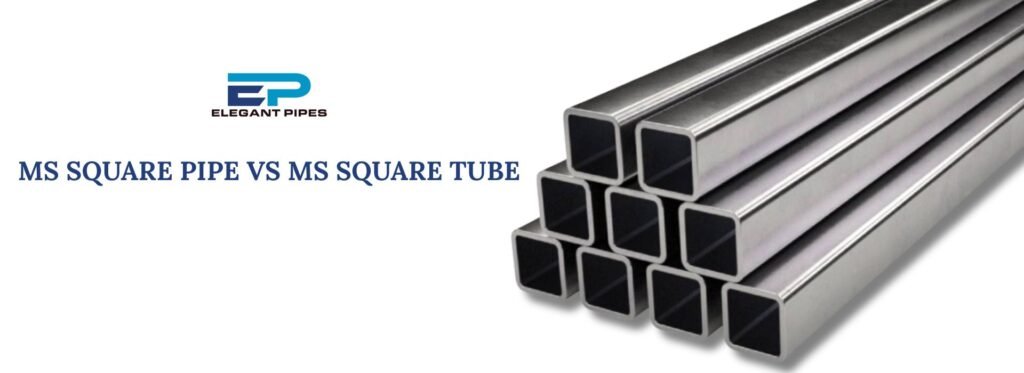
If you look at what is MS square pipe, it is a hollow section with equal sides, referred to as a square hollow section.
This symmetry allows it to handle load equally from all directions, making it stable and predictable in performance.
Where Square Pipes Are More Suitable
Square pipes are commonly used in situations where balance is required. For example:
- Columns and vertical supports in construction
- Scaffolding and safety railings
- Machinery structures using ms pipes for industrial use
- Structural systems under structural hollow sections India
When the structure needs equal strength on all sides, square pipes are usually the preferred option.
Core Difference Between Rectangular and Square Pipes
Shape, Geometry and Load Direction
The main ms square pipe vs rectangular pipe difference comes down to how each shape reacts to force.
- Rectangular pipes handle directional load more efficiently
- Square pipes distribute load evenly across all sides
This explains the difference between RHS and SHS with examples seen in real world applications.
Design Flexibility and Space Usage
In design scenarios like square pipe vs rectangular pipe for table frames, the choice depends on structure layout.
- Rectangular pipes offer better surface alignment
- Square pipes provide symmetry and uniform appearance
Both have their place depending on design intent.
Strength Behavior and Structural Performance
Directional Strength vs Balanced Strength
If you refer to a rectangular vs square pipe strength comparison chart, two patterns stand out:
- Rectangular pipes perform better in bending along one axis
- Square pipes maintain stability under multi directional load
This is why engineers select them based on structural role rather than preference.
Impact on Real Construction Projects
In steel pipes for construction, both types are used together:
- Rectangular pipes for beams and horizontal spans
- Square pipes for columns and vertical supports
This combination is common in best steel pipes for building frames, where each pipe type serves a specific purpose.
Where to Use Rectangular Pipe and Where Square Pipe Works Better
Construction and Infrastructure Use
In construction projects:
- Rectangular pipes support horizontal loads
- Square pipes support vertical loads
This approach is standard in steel pipes for construction and large frameworks.
Fabrication and Furniture Applications
For steel pipes for furniture making and fabrication:
- Rectangular pipes are used for table frames and shelving
- Square pipes are used where equal support is needed
In setups using metal tubing for fabrication, the decision depends on design orientation.
Industrial and Machinery Applications
In industrial environments using ms pipes for industrial use:
- Square pipes are used for machine frames and platforms
- Rectangular pipes are used for directional systems
Suppliers dealing in hollow section steel suppliers India often guide this choice based on usage.
Cost and Material Efficiency in Real Projects
Cost Variation in Indian Market
The ms square pipe vs rectangular pipe difference also affects pricing:
- Square pipes are generally simpler in shape
- Rectangular pipes vary based on dimensions
However, cost should always be considered along with performance.
Material Usage and Output
Using the steel pipe weight calculation formula, you can understand how material is distributed:
- Rectangular pipes concentrate strength along one axis
- Square pipes distribute material evenly
This affects efficiency, especially in large scale projects.
Fabrication, Handling and Workability
Welding and Joint Formation
In fabrication work involving metal tubing for fabrication:
- Square pipes are easier to align during welding
- Rectangular pipes require correct orientation
This difference becomes important in precision work.
Handling, Storage and Practical Use
Based on square pipe sizes and weight chart:
- Square pipes are easier to stack and store
- Rectangular pipes require more careful handling
These small factors can impact workflow in workshops.
Size Selection and Technical Considerations
Choosing Size Based on Application
Selecting the right size depends on load and usage. Tools like square pipe sizes and weight chart help in matching the correct dimensions.
Thickness, Load and Structural Fit
In systems under structural hollow sections India:
- Thickness directly affects strength
- Shape should match load direction
- Size should match application requirements
Ignoring any of these can lead to poor performance.
Common Mistakes That Affect Pipe Selection
Many issues in MS Rectangular Pipe vs Square Pipe selection come from simple oversights:
- Ignoring load direction while selecting pipe
- Choosing based only on price without checking application
- Using the same pipe type for all structures without evaluation
Avoiding these mistakes improves both performance and durability.
Making the Right Choice Based on Your Project Needs
The decision between MS Rectangular Pipe vs Square Pipe becomes easier when you focus on how the pipe will be used rather than just comparing shapes.
If your project involves beams, frames, or structures where load moves in one direction, a mild steel rectangular pipe is often the better fit. It gives better performance in such conditions and helps reduce unnecessary material use.
If you are working on columns, platforms, or structures that need equal strength from all sides, a mild steel square pipe offers more stability and flexibility during installation.
For buyers looking for consistent quality and application-based guidance, Elegant Pipes stands among reliable MS rectangular pipe suppliers, offering options suited for construction, fabrication, and industrial use.
In the end, the right choice is the one that matches your structure, not just your budget. When you align the pipe type with the actual application, the result is more stable, efficient, and easier to work with.
FAQs
Q1. Which is better square pipe or rectangular pipe for construction?
Answer: It depends on the role in the structure. For beams and horizontal members, rectangular pipes work better because they handle load along one direction. For columns and vertical supports, square pipes offer balanced strength.
Q2. What is the difference between MS rectangular pipe and MS square pipe?
Answer: The main difference is shape and load behaviour. Rectangular pipes have unequal sides and suit directional load. Square pipes have equal sides and provide uniform support from all directions.
Q3. Which pipe is stronger for load bearing structures?
Answer: Strength depends on how the load is applied. Rectangular pipes perform better in bending along one axis, while square pipes provide stable support when load comes from multiple directions.
Q4. Which pipe is better for fabrication work?
Answer: Both are used in fabrication. Rectangular pipes fit well in straight layouts and frames. Square pipes are easier when the structure requires symmetry or multi-directional joints.
Q5. Is rectangular pipe more expensive than square pipe?
Answer: Not always. The cost varies based on size, thickness, and usage. In some cases, rectangular pipes reduce the number of sections required, which can balance the overall cost.
Q6. What are the uses of rectangular hollow section?
Answer: They are widely used in beams, roof structures, machine frames, and furniture. The shape suits applications where load follows a specific direction.